
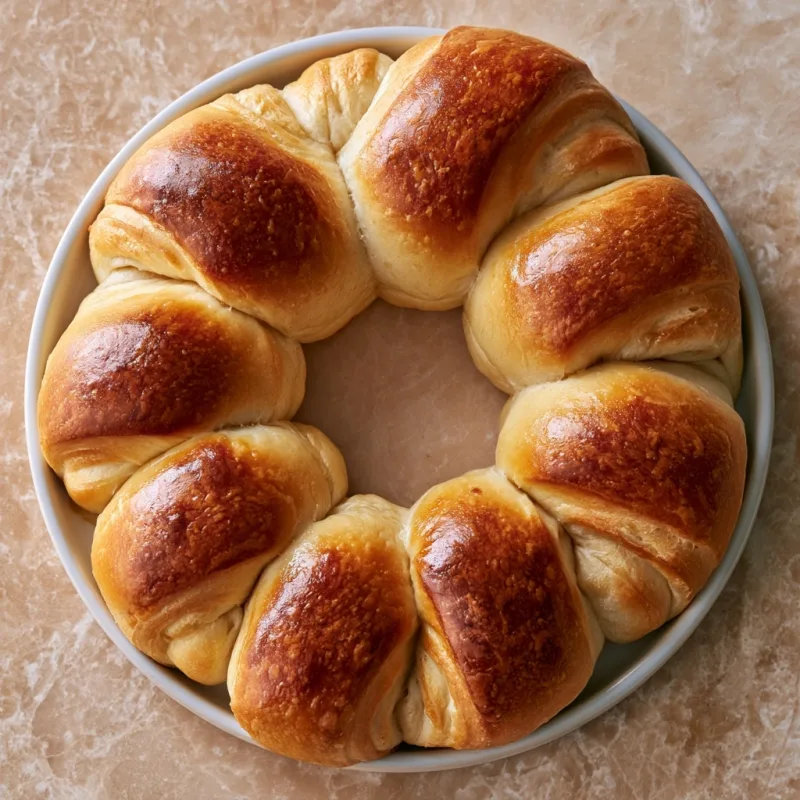
Homemade crescent rolls are soft, buttery, and ready to pull apart warm from the oven, the kind of bread that makes a weeknight dinner feel like something special. Most home bakers skip them because the lamination step (folding butter into dough) sounds fussy, but the real reason they fail is impatience: the dough needs proper rise time, and the rolls need a second rise before baking. Get those two things right, and you’ll have rolls that rival any bakery. This recipe walks you through the whole process so you can make them reliably, every time.

Why This Recipe Works
- Soft, layered crumb: Active dry yeast creates lift and structure; the butter folded into the dough creates tender, distinct layers without a lamination machine.
- Rich, buttery flavor: Softened butter mixed into the dough plus melted butter brushed on top gives you depth without heaviness.
- Two-rise method saves time: The first rise happens while you prep; the second rise is short (30, 60 minutes), so you can bake fresh rolls in under three hours total.
- No special equipment needed: A stand mixer speeds things up, but a bowl and your hands work just as well.
Ingredient Breakdown
These rolls come together with pantry staples and a little butter, nothing exotic.
- Active dry yeast (1 tablespoon / 7 g): The engine of the dough. Bloom it in warm water first so you know it’s alive; dead yeast means flat rolls. Keep it in the fridge after opening to extend its life.
- Sugar (1 teaspoon + ⅓ cup / 67 g total): The first teaspoon feeds the yeast during blooming. The rest sweetens the dough and helps it brown. Don’t skip either amount.
- Warm water (½ cup / 120 ml): Should feel like a warm bath on your wrist, around 110°F (43°C). Too hot kills the yeast; too cold and it won’t activate.
- Butter (½ cup softened + 2 tablespoons melted / 113 g + 28 g): Softened butter gets mixed into the dough for tenderness; melted butter brushes on at the end for shine and flavor. Use real butter, not margarine.
- Warm milk (½ cup / 120 ml): Adds richness and helps the dough stay soft. Warm it the same way as the water.
- Egg (1 large): Binds the dough and gives the rolls a golden crust.
- Salt (¾ teaspoon): Strengthens gluten and balances sweetness. Measure it; don’t eyeball.
- All-purpose flour (4 cups / 480 g): The structure. Add it gradually so you don’t end up with a stiff, dry dough.
How to Make Homemade Crescent Rolls Step by Step
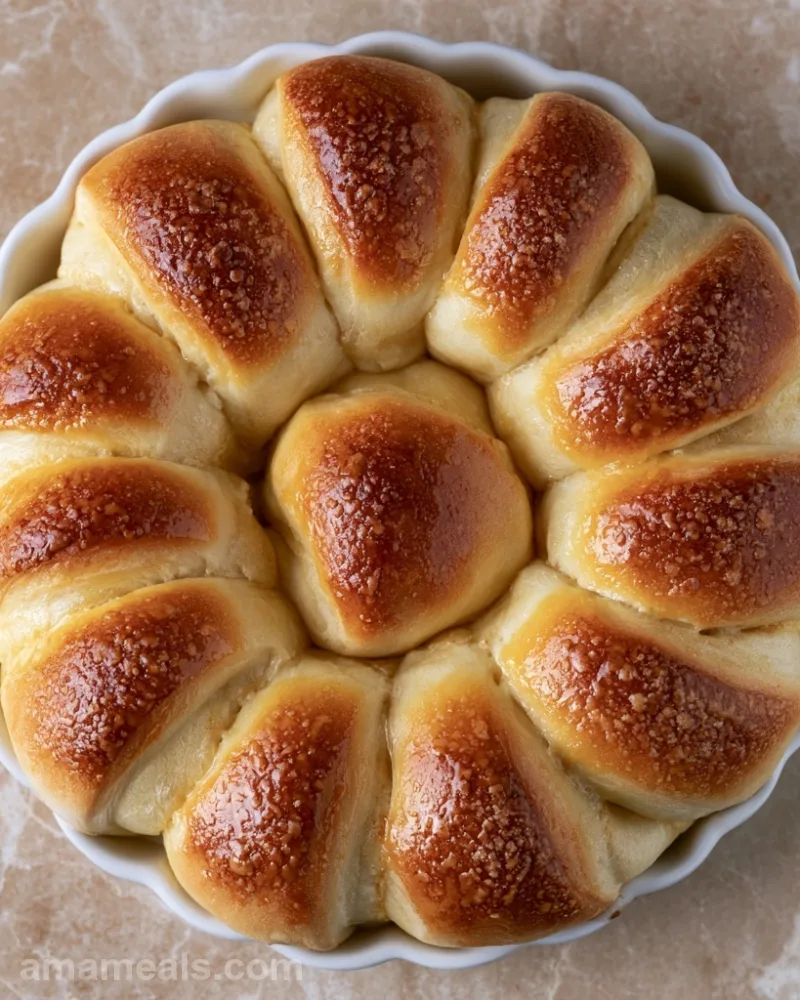
This recipe has three main stages: mixing and the first rise, shaping and the second rise, then baking and finishing.
Bloom the Yeast
- Pour the warm water into a large bowl or the bowl of a stand mixer.
- Add 1 tablespoon active dry yeast and 1 teaspoon sugar.
- Stir gently and let sit for 5, 10 minutes, until the mixture is bubbly and foamy on top.
- If it doesn’t foam, the yeast is dead; start over with fresh yeast.
Mix and Knead the Dough
- Add ½ cup softened butter, ½ cup warm milk, 1 large egg, ⅓ cup sugar, and ¾ teaspoon salt to the yeast mixture.
- Stir until combined.
- Add 2 cups flour and mix until no dry flour remains.
- Add the remaining 2 cups flour in ¼-cup increments, mixing after each addition, until the dough pulls away from the sides of the bowl and feels soft but not sticky.
- Knead by hand or machine for 6, 8 minutes, until the dough is smooth and elastic; it should spring back when you poke it.
- Shape the dough into a ball.
First Rise
- Grease a large bowl with a little oil or butter.
- Place the dough ball in the bowl and cover with a damp kitchen towel or plastic wrap.
- Let rise at room temperature for about 1 hour, until the dough has roughly doubled in size.
- You can speed this up slightly in a warm spot (like an oven with the light on), but don’t rush it; a slow rise builds flavor.
Shape the Rolls
- Gently punch down the dough to release gas.
- Divide the dough in half; you’ll shape each half into a circle of rolls.
- On a lightly floured surface, roll the first half into a circle about 12 inches wide and roughly ¼ inch thick.
- Using a pizza cutter or sharp knife, cut the circle into 12 wedges, like a pizza.
- Starting at the wide end of each wedge, roll it up tightly toward the point to form a crescent shape.
- Place each roll on a lightly greased or parchment-lined baking sheet, point-side down, so it doesn’t unroll.
- Repeat with the second half of dough.
Second Rise
- Cover the baking sheet with a damp towel or plastic wrap.
- Let the rolls rise at room temperature for 30, 60 minutes, until they’re puffy and nearly doubled.
- They should feel light and airy when you gently touch one; if they still feel dense, give them another 10, 15 minutes.
Bake and Finish
- About 15 minutes before the rolls finish rising, preheat the oven to 350°F (175°C).
- Bake the rolls for 10, 12 minutes, until the tops are golden brown and the edges are set.
- Remove from the oven and immediately brush each roll with 2 tablespoons melted butter.
- Serve warm, or let cool on a wire rack if you’re not eating them right away.
Tips and Variations
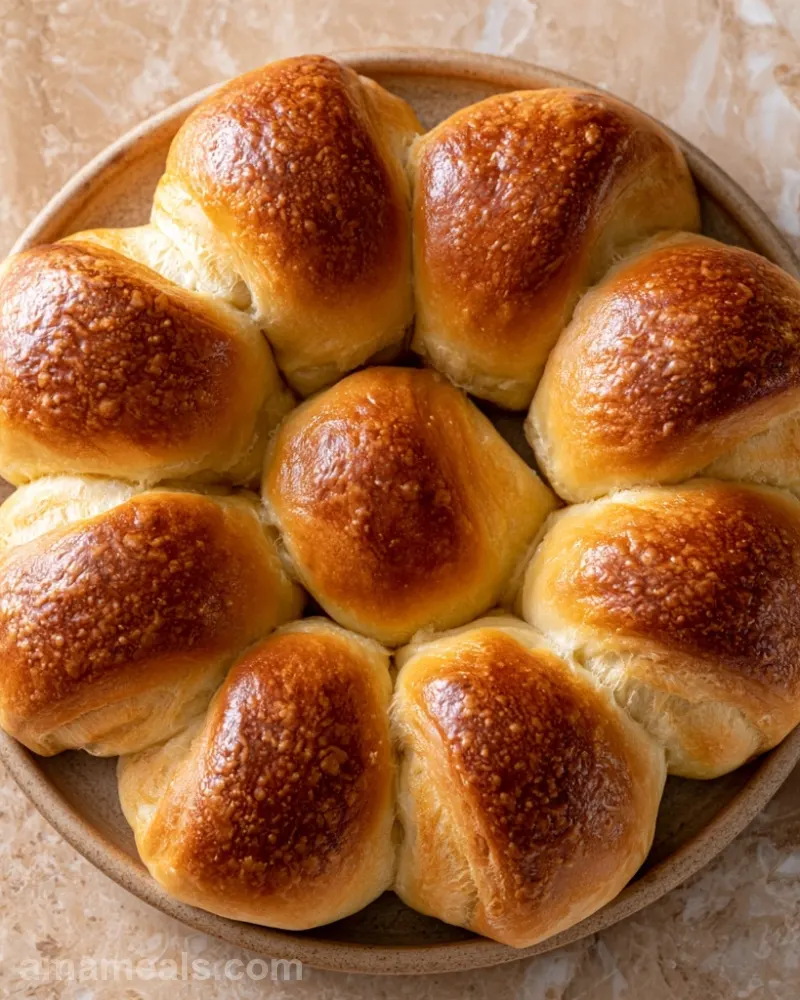
- Make ahead: Shape the rolls, cover them, and refrigerate overnight. In the morning, let them come to room temperature (about 1 hour) before baking. This also deepens the flavor.
- Freeze for later: Bake the rolls, cool completely, then freeze in an airtight container for up to 3 months. Reheat gently in a 300°F (150°C) oven for 5, 10 minutes.
- Add herbs or seeds: Brush the shaped rolls with egg wash (1 egg beaten with 1 tablespoon water) and sprinkle with sesame seeds, poppy seeds, or dried herbs before the second rise.
- Whole wheat version: Replace up to 1 cup of all-purpose flour with whole wheat flour. The rolls will be slightly denser and nuttier; add 2, 3 tablespoons extra water to the dough since whole wheat absorbs more liquid.
Serving and Storage
- Serve warm: Fresh rolls are best within a few hours of baking. Wrap them in a clean kitchen towel to keep them warm and soft.
- Store at room temperature: Keep cooled rolls in an airtight container for up to 2 days. Reheat in a 300°F (150°C) oven for 5 minutes to soften them.
- Refrigerate or freeze: Store in an airtight container in the fridge for up to 5 days, or freeze for up to 3 months. Thaw at room temperature and reheat gently.
FAQs
Can I use instant yeast instead of active dry yeast?
Yes. Use the same amount (1 tablespoon), but reduce the bloom time to 2, 3 minutes. Instant yeast is finer and activates faster.
What if my dough is too sticky after mixing?
Add flour 1 tablespoon at a time until it pulls away from the bowl. Sticky dough is common; resist the urge to dump in a lot of flour at once, or the rolls will be tough.
Can I skip the second rise?
No. The second rise is what makes the rolls light and fluffy. Skipping it gives you dense, bread-like rolls instead.
Why are my rolls flat?
Either the yeast was dead (check that it foamed during blooming), the dough didn’t rise long enough, or the oven temperature was too low. Make sure your oven is fully preheated and use an oven thermometer to verify the temperature.
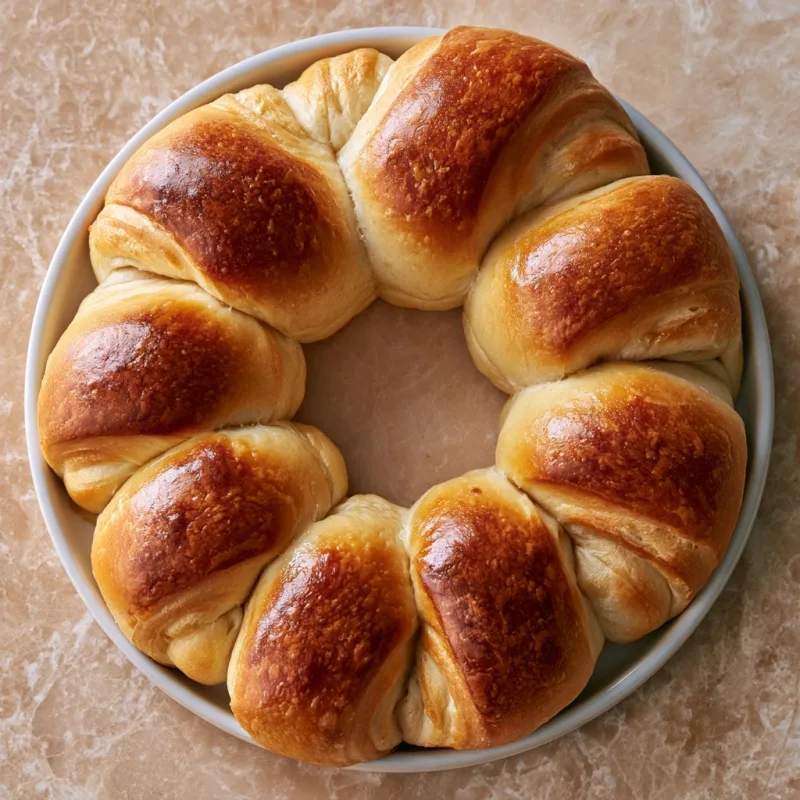
Homemade Crescent Rolls
Ingredients
Method
- Pour warm water into a large bowl. Add yeast and 1 teaspoon sugar; stir. Let sit 5-10 minutes until foamy.
- Add softened butter, warm milk, egg, ⅓ cup sugar, and salt to the yeast mixture. Stir to combine.
- Mix in 2 cups flour until no dry flour remains. Gradually add remaining 2 cups flour, ¼ cup at a time, until dough pulls away from bowl.
- Knead dough for 6-8 minutes until smooth and elastic. Shape into a ball.
- Place dough in a greased bowl, cover, and let rise at room temperature for 1 hour until doubled.
- Punch down dough. Divide in half. On a floured surface, roll each half into a 12-inch circle, ¼ inch thick.
- Cut each circle into 12 wedges. Roll each wedge tightly from the wide end to form a crescent.
- Place rolls point-side down on a greased baking sheet. Cover and let rise 30-60 minutes until puffy.
- Preheat oven to 350°F (175°C). Bake rolls for 10-12 minutes until golden brown.
- Remove from oven and brush immediately with melted butter. Serve warm.
Notes
- Make ahead: Shape rolls, cover, and refrigerate overnight. Let come to room temperature 1 hour before baking.
- Freeze baked rolls for up to 3 months; reheat in a 300°F oven for 5-10 minutes.
- For whole wheat, replace up to 1 cup flour with whole wheat and add 2-3 tablespoons extra water.
Final Thoughts
Homemade crescent rolls are worth the time. They’re soft, buttery, and a genuine crowd-pleaser at dinner, holiday tables, or weekend breakfasts. Once you nail the rise times, you’ll make them again and again. Gather your family around warm rolls straight from the oven, that’s the whole point.